From Anxiety to Joy

How One Mom Transformed Her Baby Shower Experience
Multi-generational South Asian family performing Namkaran ceremony

When Priya felt overwhelmed planning her Godh Bharai while working full-time, she discovered how to create meaningful celebrations without the stress. Her three-step approach changed everything.

Regional Adaptations for American Families

Priya Sharma stared at her grandmother's handwritten list of baby shower requirements, feeling her chest tighten. Coconuts, kalash, specific flowers, traditional sweets, mehendi artist, priest availability—the list seemed endless. At eight months pregnant and managing a demanding marketing job, the thought of planning an elaborate Godh Bharai felt more overwhelming than joyful.

"I wanted to honor my family's traditions," Priya recalls, "but I was drowning in expectations. My mother-in-law had stories of elaborate celebrations back home, my own mother remembered simpler but still formal ceremonies, and here I was, trying to figure out how to make it all work while barely having energy to grocery shop."

Sound familiar? Priya's breakthrough came when her own grandmother sat her down for tea. "Beta," she said gently, "what is the real purpose of Godh Bharai?"

Understanding the Heart, Not Just the Checklist

Cultural Wisdom: The Godh Bharai ceremony centers on blessing the mother and unborn child, surrounding them with positive energy, and gathering the community to offer support. The Sanskrit word "Godh" means lap, and "Bharai" means filling—literally filling the mother's lap with gifts, blessings, and love.

"Once I understood that the ceremony was about creating a circle of protection and joy around me and my baby, everything else became secondary," Priya explains. "The elaborate decorations and extensive guest lists weren't the point—the love and blessings were."

Choose Your Core Elements:

  • Essential: Family blessings, sacred thread tying (if part of your tradition), sharing of hopes for the baby
  • Beautiful but Optional: Elaborate decorations, extensive menus, professional entertainment
  • Your Choice: Mix traditional elements with what brings you peace

The 'Reflective, Connected, Vibrant' Planning Method

Instead of trying to do everything perfectly, Priya created three versions of her celebration:

Reflective: Intimate Family Blessing (What Actually Happened)

A peaceful ceremony focusing on deep spiritual connection and family bonds...

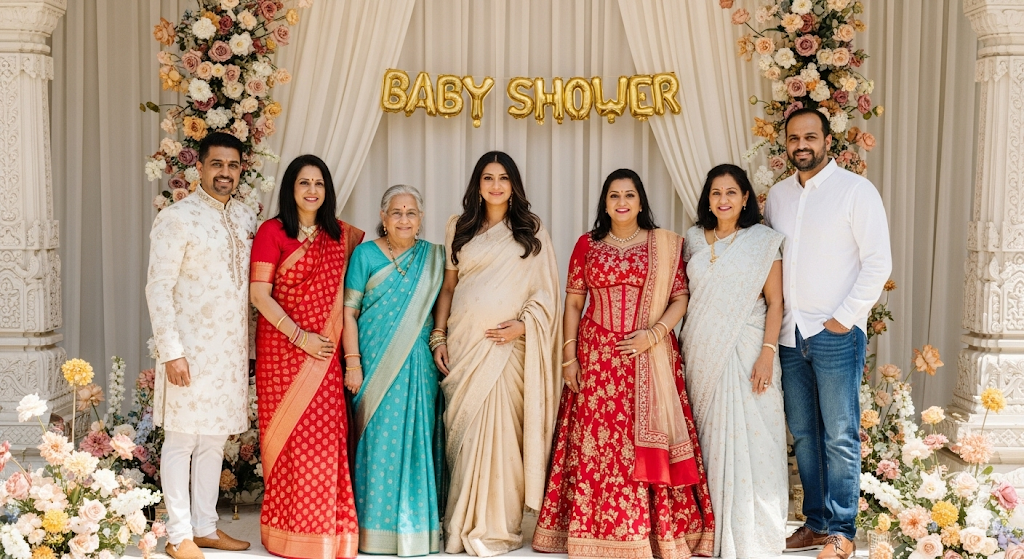
  • Guest List: 12 people (immediate family + closest friends)
  • Setting: Her living room, simply decorated with marigold garlands and diyas
  • Activities: Traditional blessing with sindoor and flowers, sharing stories about the baby's name, homemade sweets
  • Time: 2 hours on a Sunday afternoon
  • Result: Deeply meaningful, stress-free, and exactly what her heart needed

Connected: Extended Family Gathering (Her Alternative)

  • A warm reunion bringing together the broader family circle for shared traditions...
    • Guest List: 25-30 people including aunts, uncles, and family friends
    • Setting: Community center or family member's larger home
    • Activities: Brief traditional ceremony, mehendi for interested guests, potluck-style meal

Vibrant: Full Traditional Celebration (Her "Future Vision")

A joyful cultural event celebrating with the entire community...

  • Guest List: 50+ people
  • Setting: Rented venue or large home
  • Activities: Complete traditional rituals, professional mehendi artist, catered meal, cultural entertainment

The Magic: Having three meaningful options removed pressure and let her choose what felt right for this moment in her life.
The "Tradition Plus" Approach: Traditional Elements She Kept

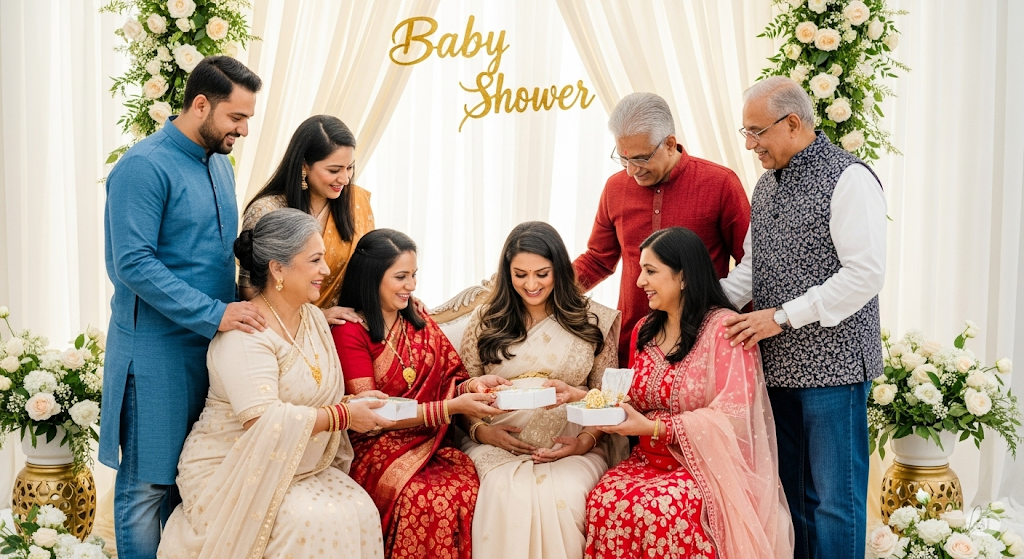
Blessing Ritual

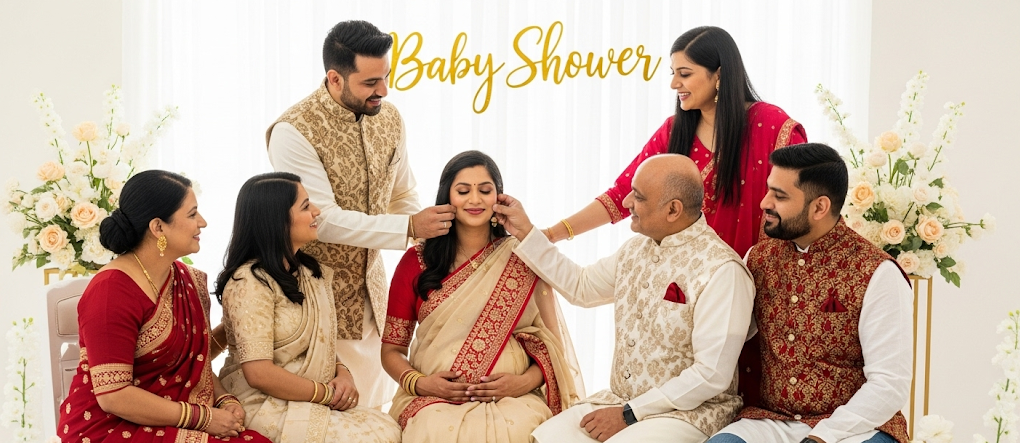
Her mother-in-law performed the traditional tikka and placed flowers in her hair

Sacred Thread

Red thread tied around her wrist for protection (a custom from her husband's family)

Coconut Ceremony

Breaking a coconut to symbolize smooth delivery (adapted by having her grandmother do this in the backyard)

Cultural Insight

The red thread (raksha sutra) is believed to protect both mother and child during pregnancy and childbirth. Different regions have variations—some use gold thread, others incorporate specific prayers.

Modern Adaptations She Added

Digital Invitations: Beautiful e-invites featuring traditional motifs but sent via WhatsApp Playlist: Mix of traditional bhajans and her favorite calming music Guest Book: A beautiful journal where guests wrote blessings and advice Photography: Her cousin captured candid moments instead of hiring a professional

Time-Saving Tips That Honored Tradition

Pre-made Traditional Sweets: Bought authentic mithai from her favorite Indian grocery store Simplified Decoration: Used LED string lights with marigold garlands Potluck Blessing: Asked each family member to bring one traditional dish Flexible Timing: Held the ceremony during lunch instead of evening

Regional Adaptation Guide

North Indian Families

  • Core: Sindoor ceremony, yellow saris, coconut breaking
  • Simplified: Use store-bought marigolds, delegate music to family member with good playlist
North Indian Families

South Indian Families

  • Core: Odd number of gifts (traditionally 7 or 9), specific flowers like jasmine
  • Simplified: Buy flowers from Indian grocery store, use banana leaves as natural decoration
South Indian Families

Bengali Families

  • Core: Fish and rice ceremonial elements, specific alpana patterns
  • Simplified: Draw simple rangoli designs, focus on symbolic foods rather than elaborate feast
Bengali Families

Modern Fusion

  • Honor one traditional element meaningfully
  • Add personal touches that reflect your family's story
  • Focus on the blessing aspect rather than elaborate rituals
Modern Fusion

The Unexpected Magic

  1. "What surprised me most," Priya reflects, "was how much more present I felt during the actual celebration. Because I wasn't stressed about logistics, I could really absorb the blessings, the stories my aunts shared about their pregnancies, the way my grandmother's eyes lit up when she talked about the baby."
  2. The simplified approach also created space for spontaneous beautiful moments:
    • Her teenage niece spontaneously sang a lullaby her own grandmother had sung
    • The women naturally gathered in a circle, sharing birth stories and motherhood wisdom
    • Her husband, initially unsure about participating, ended up leading a blessing for their unborn daughter

Your Planning Roadmap

Before You Start Planning

  1. Reflect on These Questions:
    1. What aspects of the tradition feel most meaningful to you personally?
    2. What would make you feel most supported during this transition?
    3. Who are the people whose presence would matter most?
    4. What would success look like for YOUR celebration?

Practical Planning Steps

  1. Week 1: Define your "why" and core elements
  2. Week 2: Create your three-tier plan (Good/Better/Best)
  3. Week 3: Send invitations (2-3 weeks notice, not months)
  4. Week 4: Prepare simple elements, delegate what you can

Essential vs. Optional Elements

Essential for Any Celebration
  • Family blessings and good wishes
  • Some form of traditional blessing (tikka, flowers, or thread ceremony)
  • Sharing food together (even simple snacks)
  • Creating space for gratitude and joy
Optional Enhancements:
  • Professional decorations or photography
  • Elaborate traditional foods
  • Large guest lists
  • Formal ceremony structure
  • Expensive gifts or favors

The Deeper Truth

Priya's story reveals something profound: traditions survive not because we execute them perfectly, but because we understand their heart and adapt them with love. Her daughter, now two, already loves looking at photos from that intimate afternoon ceremony. The joy and peace captured in those images matter more than any elaborate decoration could have.

"I want her to know that our traditions are about love, not perfection," Priya says. "When it's her turn, I hope she'll feel free to create a celebration that honors both her heritage and her own heart."

The most beautiful part? Three of Priya's friends have used her approach for their own celebrations, each adapting it further to fit their circumstances. One friend held hers in a hospital room due to bed rest requirements. Another combined it with her baby shower for her husband's family, creating a beautiful East-meets-West celebration.

Key Takeaways for Your Celebration

Intention Trumps Scale: A heartfelt ceremony with 10 people can be more meaningful than an elaborate event with 100

Flexibility Reduces Stress: Having multiple planning options gives you permission to choose what works

Modern Tools Can Honor Tradition: Technology and convenience don't diminish cultural significance

Your Story Matters: Adapting traditions to fit your life honors both heritage and authenticity

Key Takeaways for Your Celebration

That's the real magic of tradition—it grows and adapts while keeping its essential spirit alive. The blessing doesn't require perfection; it requires presence, love, and the intention to mark this sacred transition with your community.

Your Godh Bharai can be as simple or elaborate as feels right for your family. What matters is that you're surrounded by love, blessed with good wishes, and supported as you prepare to welcome new life into the world

Modern Tools Can Honor Tradition:Technology and convenience don't diminish cultural significance

Ready to plan your own meaningful Godh Bharai? Remember: the most beautiful celebrations happen when tradition meets authenticity, and your heart guides the way.
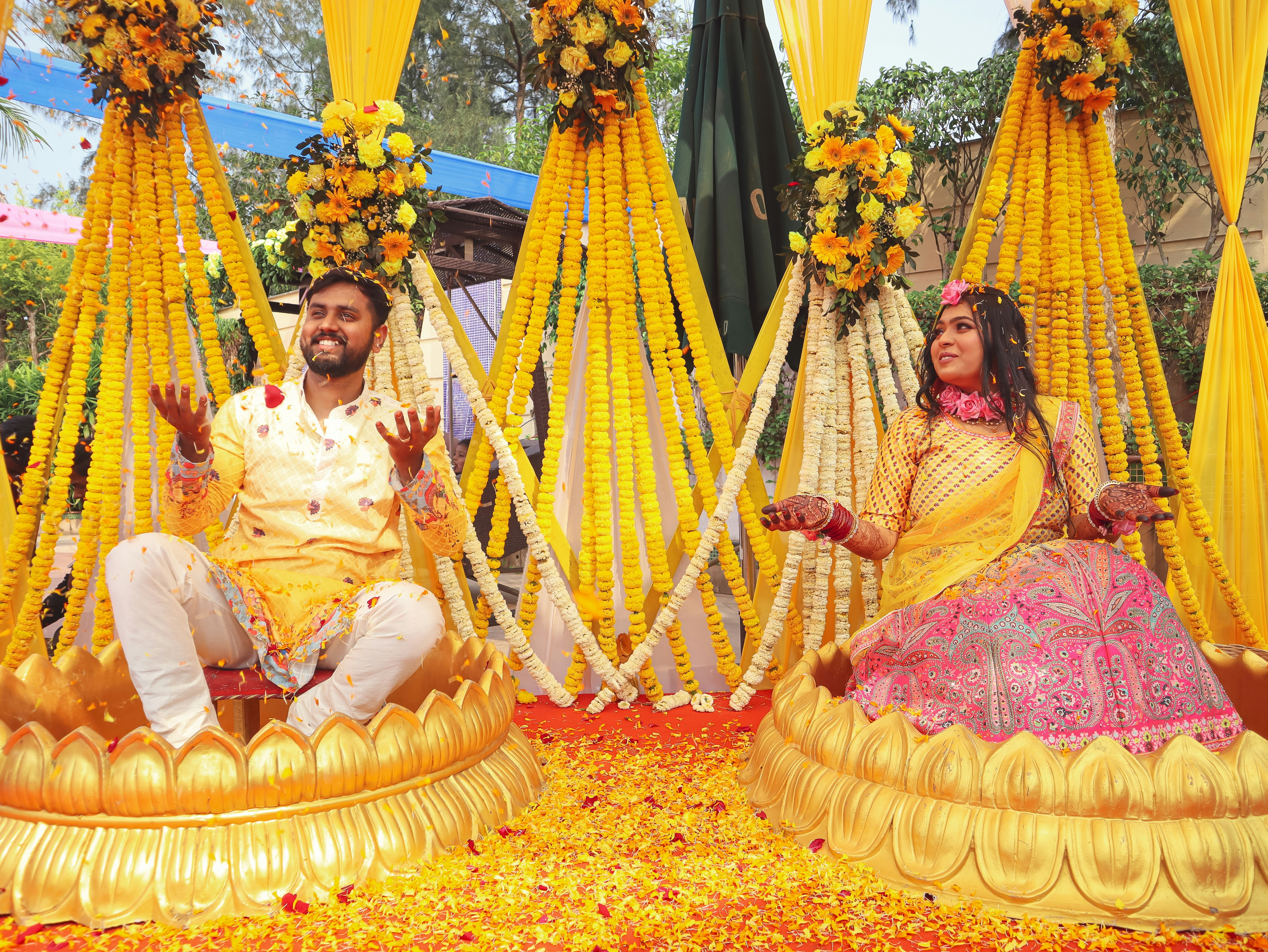
Elegant wedding reception with floral centerpieces

Your Celebration, Our Circle

Find your dream team. Celebrate with EverlyUs