A Beautiful Diversity

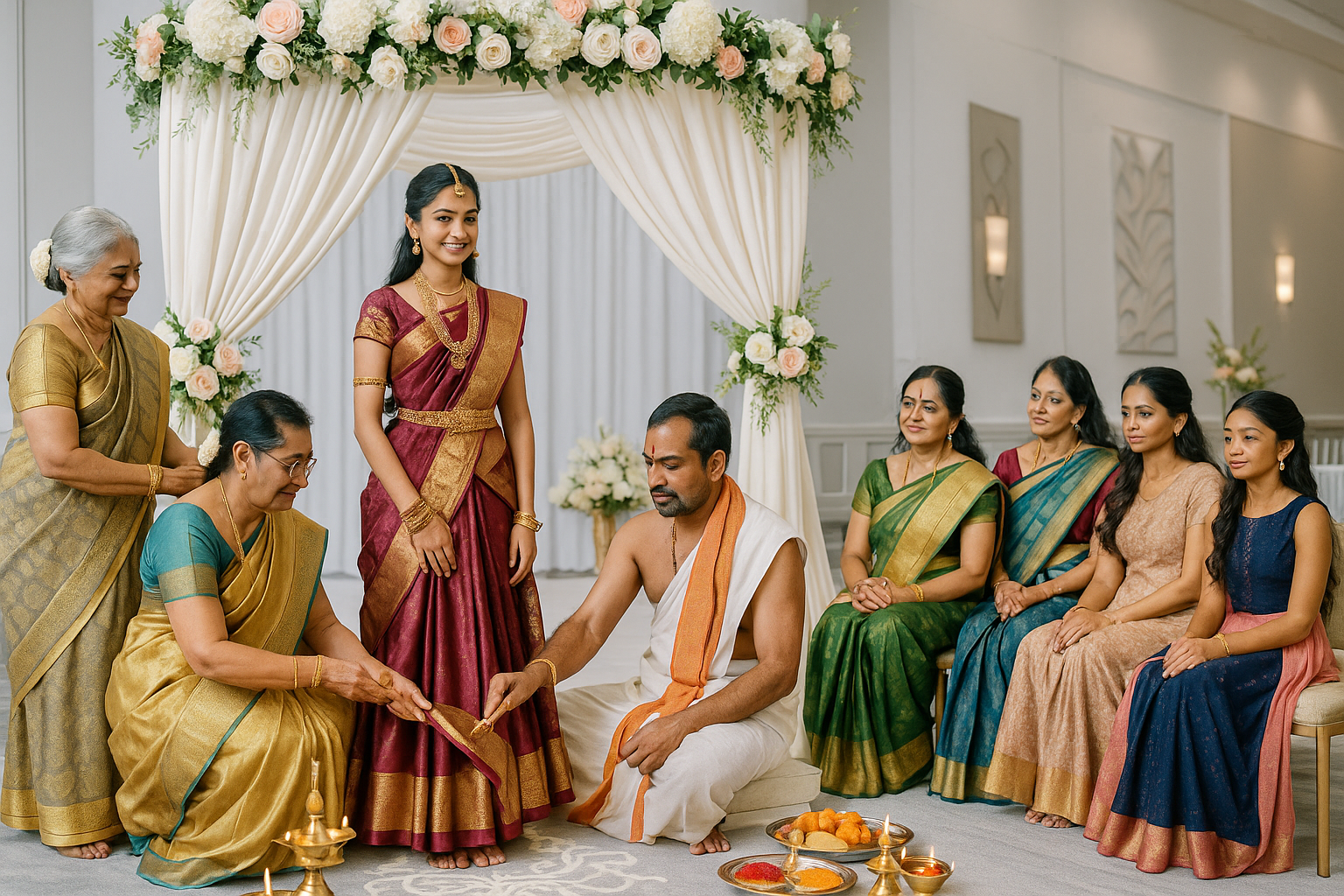
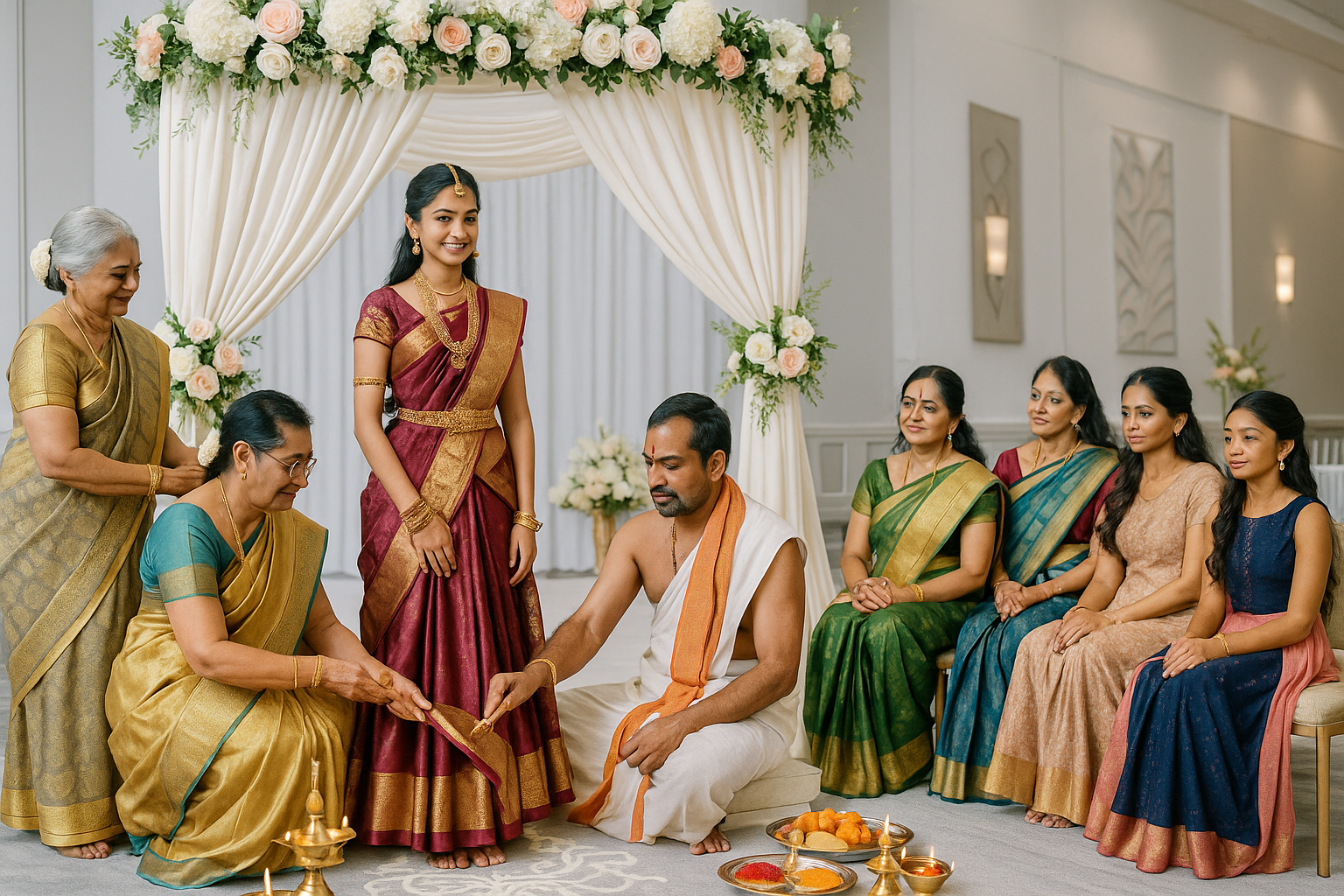
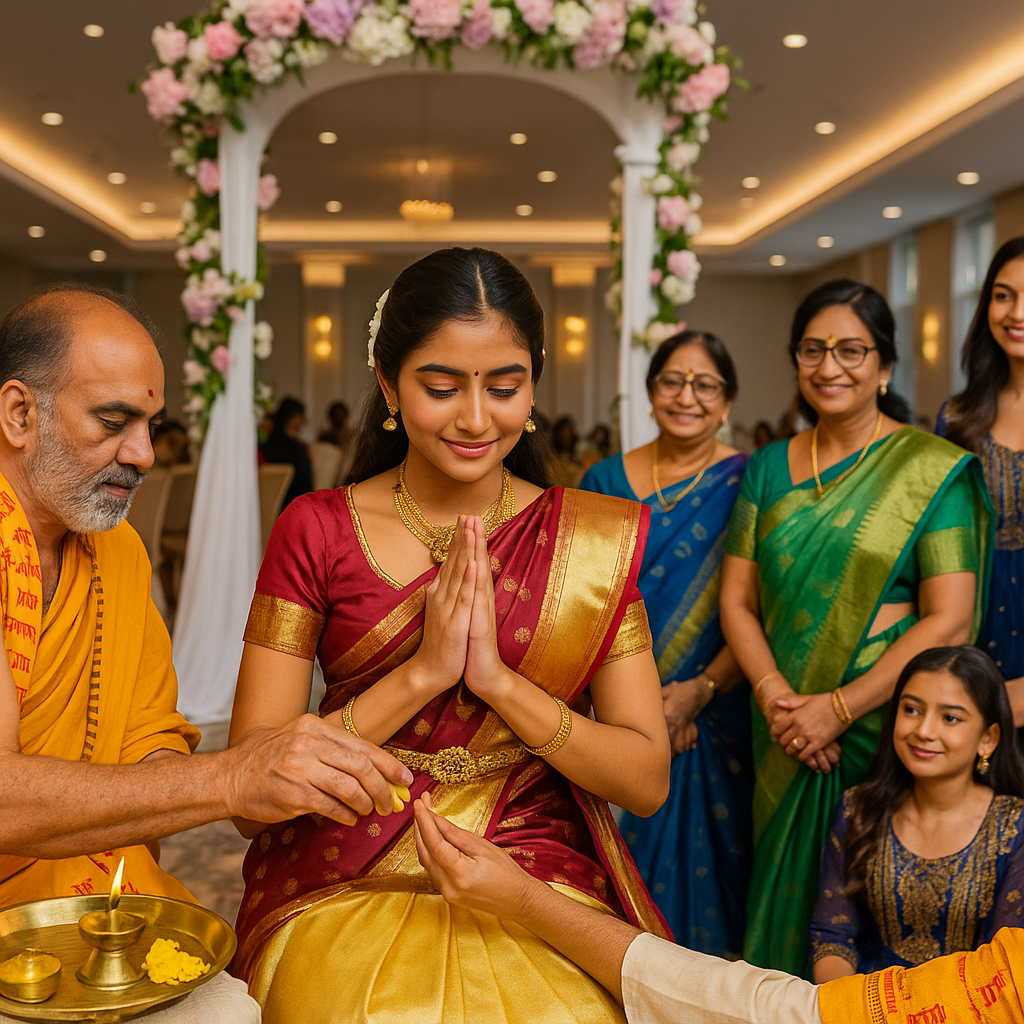
Half saree ceremony

Understanding regional variations in coming-of-age ceremonies across South Asian traditions

When Priya's daughter turned 14, three different aunties called within a week. Her Telugu grandmother insisted on a traditional Langa Voni ceremony with specific silk sarees and gold jewelry.

Her Tamil mother-in-law spoke passionately about Pavadai Dhavani traditions with temple visits and classical music. Meanwhile, her Gujarati friend shared photos of her daughter's beautiful half saree celebration that looked entirely different from both.
Sound familiar? If your family tree spans different regions of South Asia—or if you're simply curious about the rich diversity of coming-of-age traditions—you're not alone in feeling both amazed and slightly overwhelmed by the beautiful complexity of our cultural heritage.
Here's what we've learned from working with hundreds of families: there's no single "right" way to celebrate these milestones. Instead, there's a gorgeous tapestry of traditions, each reflecting the unique history, values, and artistic sensibilities of different regions and communities.
What Success Actually Looks Like

Understanding the Common Thread

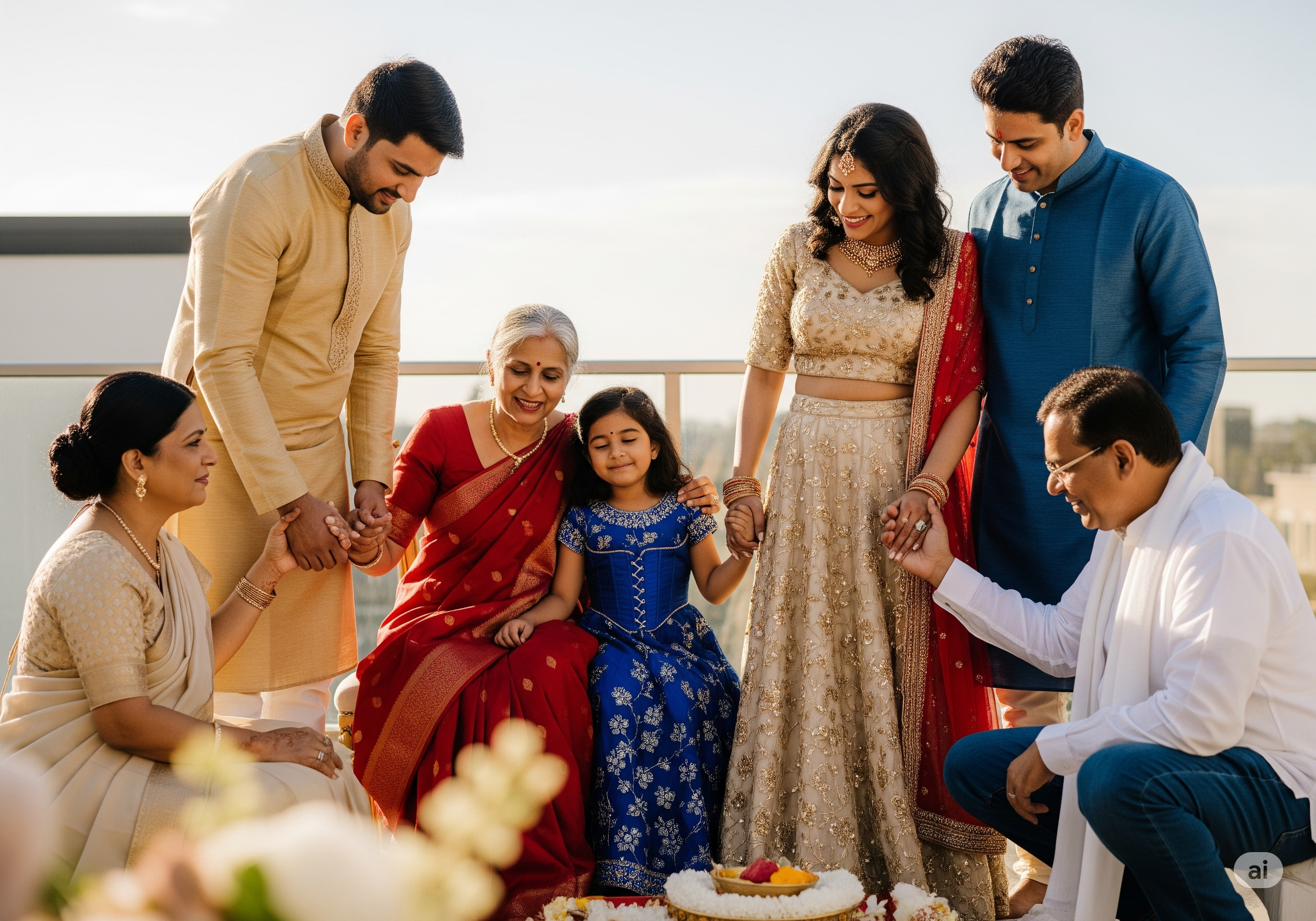
Before we explore the differences, let's appreciate what unites these diverse traditions. Whether it's called Langa Voni, Pavadai Dhavani, Half Saree, or something else entirely, the essence remains the same: marking a young person's transition from childhood to a new phase of life with dignity, joy, and cultural connection.

"Every region developed its own way of honoring this sacred transition, shaped by local customs, climate, available materials, and community values. But the heart—celebrating growth, family bonds, and cultural identity—that stays constant."


— Dr. Lakshmi Reddy, Cultural Anthropologist

Think of it like classical music: whether it's Carnatic or Hindustani, the fundamental principles of raga and tala remain, but the expression varies beautifully based on regional influences and artistic evolution.
What Success Actually Looks Like

Half Saree Ceremonies: Regional Treasures

The half saree ceremony—marking a young girl's transition to womanhood—varies significantly across South Indian regions, each carrying centuries of cultural refinement and local adaptation.

Langa Voni CeremonyTelugu Traditions

Traditional Attire
  • Rich silk Langa with intricate zari work
  • Contrasting or matching Voni (dupatta)
  • Traditional blouse with regional embroidery
  • Heavy gold jewelry including temple designs
Signature Elements
  • Jasmine flowers arranged in long braids
  • Grandmother performs the Voni draping ritual
  • Traditional Telugu music and possibly Kuchipudi dance
  • Elaborate feast with Andhra specialties
Cultural Touches
  • Mangala Harathi with traditional songs
  • Family elders share ancestral stories
  • Regional sweets like Ariselu and Bobbattu
  • Blessing ceremonies with turmeric and kumkum

Pavadai Dhavani CeremonyTamil Traditions

Traditional Attire
  • Silk Pavadai with traditional motifs
  • Dhavani draped in distinctive Tamil style
  • Temple jewelry including Oddiyanam
  • Fresh flower garlands and hair ornaments
Signature Elements
  • Classical Carnatic music performances
  • Bharatanatyam dance presentations
  • Temple visit for blessings
  • Literary appreciation and cultural education
Cultural Touches
  • Recitation of Tamil poetry
  • Traditional games and cultural activities
  • Regional delicacies like Payasam and Murukku
  • Elders' blessings with sacred ash

Langa Davani CeremonyKannada Traditions

Traditional Attire
  • Karnataka silk with regional patterns
  • Davani with distinctive draping style
  • Traditional Mysore jewelry designs
  • Regional flower arrangements and ornaments
Signature Elements
  • Local flower traditions unique to Karnataka
  • Regional music and folk performances
  • Family customs passed down generations
  • Community participation and blessings
Cultural Touches
  • Kannada literary elements
  • Traditional Mysore Pak and regiona sweets
  • Folk songs and regional celebrations
  • Local temple traditions and customs

Langa Voni (Kerala Style)Kerala Traditions

Traditional Attire
  • Kerala handloom with gold borders
  • Traditional Kasavu work
  • Distinctive Malayalam jewelry styles
  • Ayurvedic preparation and ceremonies
Signature Elements
  • Traditional Kerala cultural performances
  • Ayurvedic blessings and preparations
  • Family boat house or traditional venue
  • Malayalam literary and cultural elements
Cultural Touches
  • Traditional Kerala feast on banana leaves
  • Classical Kerala music and Mohiniyattam
  • Regional sweets and coconut preparations
  • Backwater or heritage venue celebrations

Sacred Thread Ceremonies: Diverse Spiritual Traditions

The Upanayana or sacred thread ceremony also shows beautiful regional variation while maintaining its core spiritual significance. Here's how different communities approach this sacred milestone:

North Indian (Upanayana)

Ceremony Duration
  • Multi-day elaborate ritual
Key Elements
  • Vedic mantras, havan, extended family feast
Cultural Focus
  • Spiritual education, family lineage
Modern Adaptations
  • Home ceremonies, simplified rituals

South Indian (Brahmopadesam)

Ceremony Duration
  • Temple-centered ceremony
Key Elements
  • Temple rituals, priest-led ceremonies, classical music
Cultural Focus
  • Temple connection, scholarly tradition
Modern Adaptations
  • Cultural centers, educational

Gujarati (Janoi)

Ceremony Duration
  • Community celebration
Key Elements
  • Traditional sweets, community participation, festive atmosphere
Cultural Focus
  • Business ethics, community values
Modern Adaptations
  • Community halls, family-friendly events

What Makes Each Tradition Special

Understanding these differences isn't just about cultural trivia—it's about appreciating the thoughtful evolution that shaped each tradition. Here's what we can learn from each regional approach:
Telugu Langa Voni: The Art of Grandmotherly Wisdom

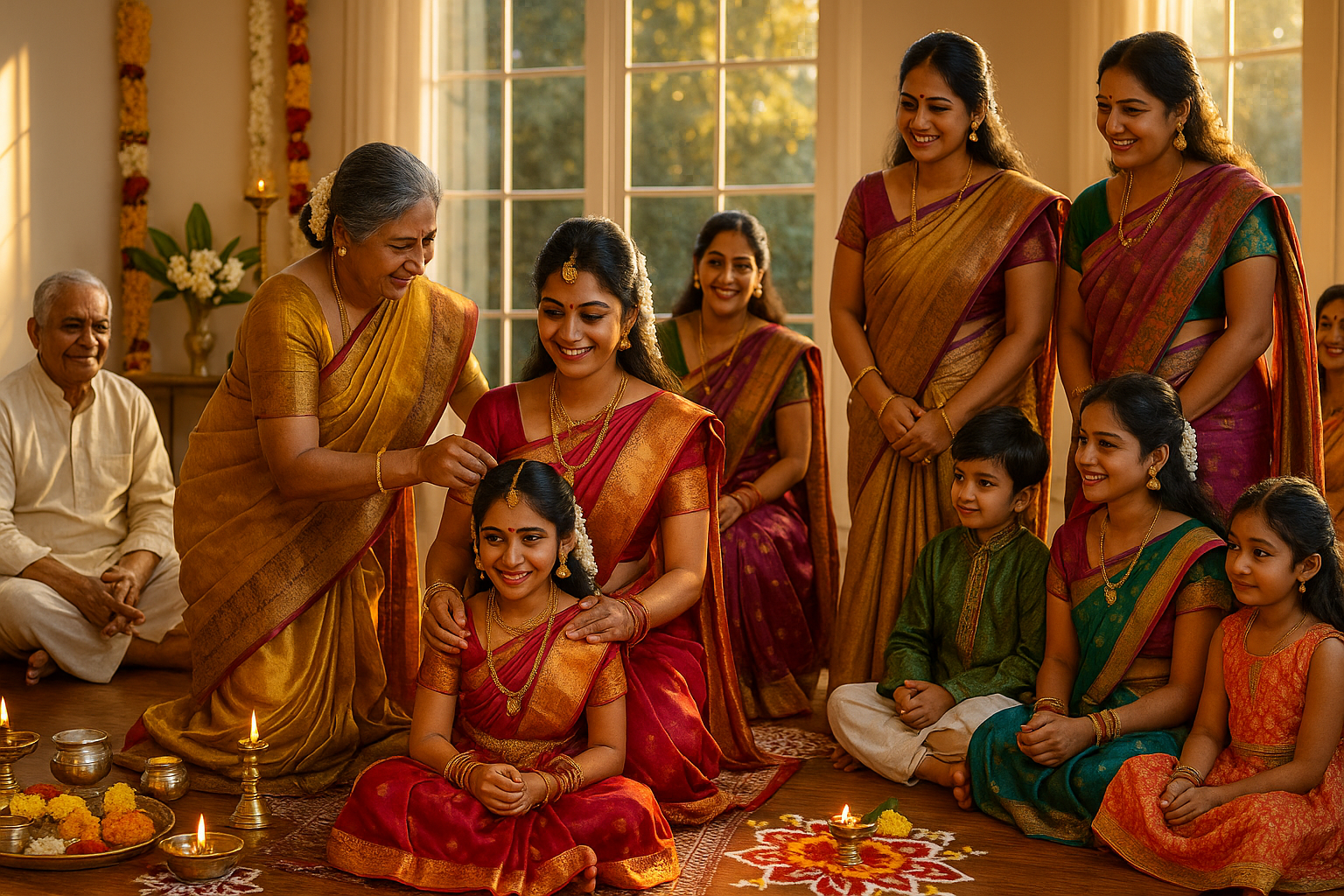
  • The Telugu tradition places extraordinary emphasis on the grandmother's role in the Voni draping ceremony. This isn't just about fabric—it's about the transfer of women's wisdom across generations. The specific way the Voni is draped, the songs sung during the process, and the stories shared create an intimate bridge between past and future.
  • Modern families are adapting this by: Creating dedicated "grandmother time" during the ceremony, documenting the stories and songs, and involving grandmothers via video call when distance is a factor.
Telugu Langa Voni: The Art of Grandmotherly Wisdom

Tamil Pavadai Dhavani: Cultural Education as Celebration

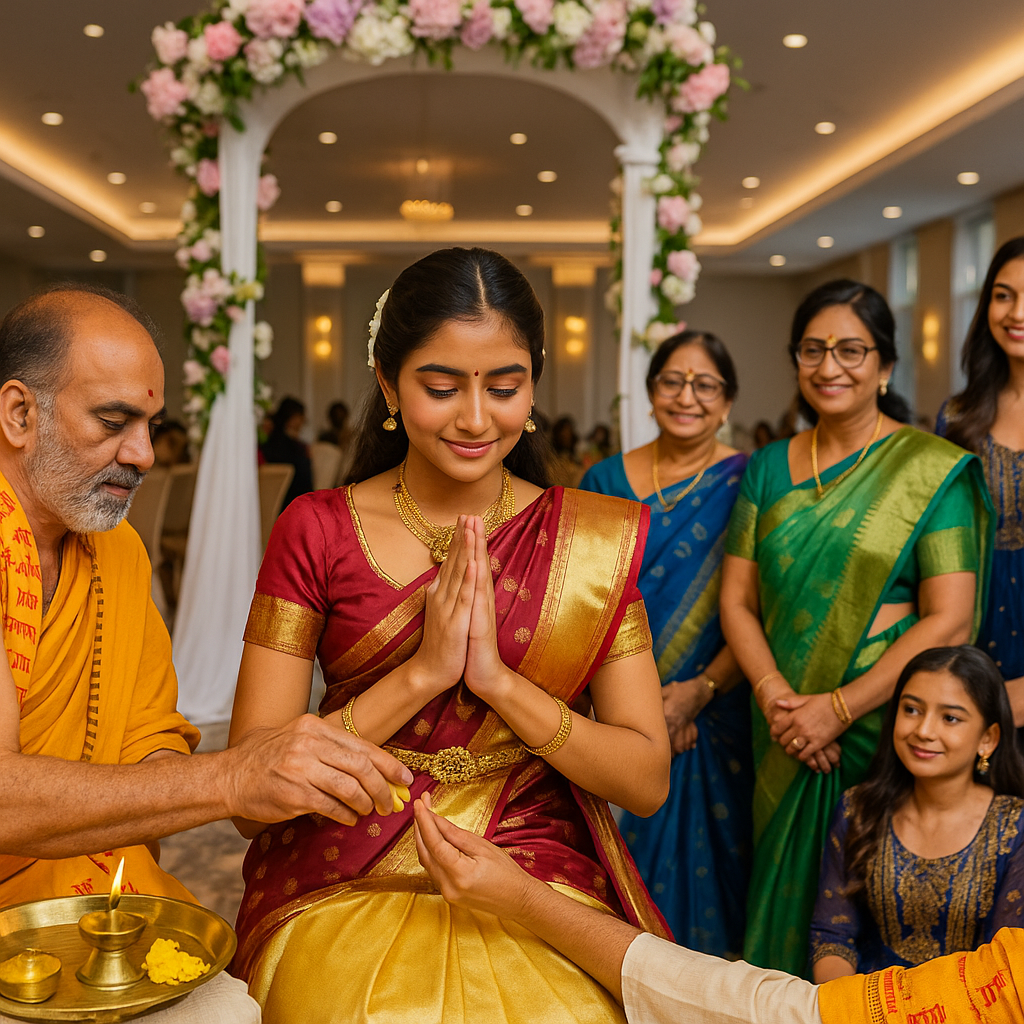
  • Tamil traditions often incorporate significant educational elements—poetry recitation, classical music performances, and literary discussions. The ceremony becomes a celebration of cultural literacy, not just a ritual passage.
  • Modern families are adapting this by: Including cultural workshops for extended family, having teens present on Tamil literature or classical arts, and connecting the ceremony to ongoing cultural education.
Tamil Pavadai Dhavani: Cultural Education as Celebration

Kannada Langa Davani: Community Connection

  • Karnataka traditions often emphasize community participation and local customs that have evolved specifically within individual families or neighborhoods. This creates ceremonies that feel deeply rooted in place and relationship.
  • Modern families are adapting this by: Involving neighbors and family friends in meaningful ways, incorporating local venue traditions, and creating new family customs that honor the community-centered spirit.
Kannada Langa Davani: Community Connection

What Makes Each Tradition Special

Many families today blend elements from different regional traditions, creating beautiful fusion celebrations.

Multi-Cultural Families

When parents come from different regions, ceremonies can honor both traditions—perhaps Telugu rituals in the morning and Tamil cultural elements in the evening celebration.

American Venue Adaptations

Families are beautifully adapting traditional elements to American venues—temple ceremonies followed by hotel receptions, garden ceremonies with traditional setups.

Inclusive Community

Many families include explanations and participation opportunities for non-South Asian friends, creating bridges between cultures while maintaining authenticity.

Technology Integration

Virtual participation for distant relatives, professional photography focused on cultural moments, and digital documentation of family stories and traditions.

Practical Guidance: Choosing Your Family's Approach

If you're feeling overwhelmed by the options, here's a framework that many families find helpful:

Creating Your Family's Cultural Map

  • Identify your primary traditions: Which regional background(s) do you want to primarily honor?
  • Choose meaningful elements: What aspects of the tradition feel most significant to your family?
  • Consider your child's comfort: What scale and style would make them feel celebrated, not overwhelmed?
  • Plan for education: How will you help your child understand the cultural significance?
  • Include extended family wisely: How can different family members contribute their cultural knowledge?
  • Document the choices: Create a record of why you chose specific elements for future reference

Working with Mixed Regional Heritage

Many families today navigate multiple regional traditions. Here are strategies that work:

The "Two-Day" Approach

Some families host separate ceremonies honoring different traditions, perhaps a traditional ceremony one day and a more contemporary celebration another day.

The "Fusion" Approach

Blend elements thoughtfully—perhaps Telugu musical traditions with Tamil literary elements, or Kannada community customs with any regional attire prefe

The "Alternating" Approach

Honor different traditions for different children, or alternate between traditions for different milestones

The "Elements" Approach

Choose specific meaningful elements from each tradition rather than trying to incorporate everything.

"There's no cultural police coming to check your authenticity. The most authentic celebration is one that feels true to your family's story and helps your child feel connected to their heritage in a meaningful way."

— Meera Nair, Cultural Heritage Consultant

Regional Resources: Finding Authentic Guidance

When planning your celebration, connecting with knowledgeable sources within your specific tradition can make all the difference:

Community Temples and Cultural Centers

Most major cities have region-specific temples or cultural organizations that can provide guidance on traditional elements and connect you with experienced families.

Regional Associations

Telugu associations, Tamil sangams, Kannada koota organizations often have members who are experts in traditional ceremonies and can offer both guidance and vendor recommendations.

Cultural Consultants

Many communities now have cultural consultants who specialize in helping families plan authentic yet contemporary ceremonies.

Extended Family Networks

Your aunties, grandmothers, and family friends often carry deep knowledge about specific regional practices—don't hesitate to ask for their input and stories.

The Beauty of Choice

Here's what we've learned from years of helping families navigate these beautiful complexities: there's extraordinary freedom in understanding your options. When you know the rich tradition you're drawing from, you can make informed choices about what to preserve, what to adapt, and what to create anew.

Your daughter's half saree ceremony doesn't have to look exactly like her cousin's in Chennai or her friend's in Mumbai. It needs to feel right for your family, in your place, at this time in your lives.

The goal isn't perfect authenticity—it's meaningful connection. Whether you choose a traditional Telugu Langa Voni with all the elaborate customs, a simplified Tamil-inspired ceremony in your backyard, or a beautiful fusion that honors multiple traditions, what matters is the intention and love behind your choices. These regional variations aren't obstacles to navigate—they're treasures to explore. Each tradition offers wisdom, beauty, and time-tested ways of marking life's important transitions. The challenge isn't choosing the "right" tradition; it's choosing the approach that will help your child feel proud of their heritage and connected to the values you want to pass on.

"When my daughter wore her great-grandmother's Telugu jewelry with a Tamil-style half saree at a ceremony that included her Gujarati friends, it felt like the most authentic representation of who we are as a family—rooted in tradition but growing in new soil."

— Sushma, mother of 16-year-old Kavya

In the end, the most beautiful ceremony is one where tradition serves your family's story, not the other way around. Whether you choose to honor one specific regional tradition in all its elaborate glory or create a thoughtful fusion that reflects your family's unique journey, you're contributing to the ongoing evolution of these ancient practices.


And that evolution—that adaptation while maintaining essence—that's not a compromise. That's exactly how traditions have always stayed alive.

Ready to Explore Your Family's Traditions?

Connect with cultural consultants and vendors who understand the beautiful diversity of South Asian coming-of-age traditions. Create a celebration that honors your specific heritage.
Find Regional Expert Vendors
Elegant wedding reception with floral centerpieces

Your Celebration, Our Circle

Find your dream team. Celebrate with EverlyUs